




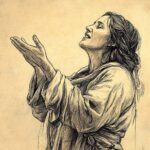

Who or what is the object of your faith? Put another way, assuming we all have at least a vague understanding about what it is, when we exercise faith, is it towards an end—some desired result—or is it an expression of trust in a person? I will be making a case for faith primarily being about the person of Christ, as opposed it being about what we desire—whether that be a bigger house, more money, a new car, and so on. We will see that material blessing can certainly be a secondary result of our relationship with Christ. Only, that isn’t guaranteed by God.
Must It Move Mountains?
Many people believe that faith is needed to radically change things, cause great shifts and even upend reality as we know it. This premise isn’t merely propagated by a rogue stream of theology. It’s an understandable deduction from certain scriptures. Consider Matthew 17:20. “He said to them, ‘Because of your little faith. For truly, I say to you, if you have faith like a grain of mustard seed, you will say to this mountain, ‘Move from here to there,’ and it will move, and nothing will be impossible for you'” (see also Luke 17:6).
It’s not so strange that many believe that they must have faith for a thing to change.
Some versions, such as the NKJV, include Matthew 17 verse 21, which goes on to say, “This kind does not go out except by prayer and fasting.” There’s a fair argument for the “kind” being faithlessness or little faith. Notice also the response that Jesus got from the father of the boy with a mute spirit, which the disciples couldn’t cast out. “Help my unbelief,” is what the man cried out (Mark 9:24). Again, Jesus sees the faith of the paralytic’s friends before he heals him (Luke 5:20; Mark 2:5). Faith is a prerequisite for things to change or shift, not so?
It is, therefore, not so strange or far-fetched that we’ve gotten to a place where many believe that they must have faith for a thing to change or that it must be strong or visible.
This Raises at Least Two Questions
- What is faith?
- In the above examples, among the many more, in whom or what was their faith?
So, What Exactly Is Faith?
The first question would lead many to Hebrews 11:1. “Faith is the substance of things hoped for and the evidence of things not seen.” It’s a verse I’ve known since growing up in church.
But this doesn’t exactly solve the problem or answer the question, because many preachers have emphasised the “things” in that verse; and they’ve supported it with the “whatever” in “whatever you ask in my name, this I will do” (John 14:13). Is faith then the means to an end by which we acquire whatever things we want from God in life? To answer those questions and better define faith, we need to consider the object of faith.
What Is Faith’s Object?
To answer this question, we must consider faith in the broader picture of the Bible, in the entirety of scripture. Beginning with Abraham, fondly called the ‘father of faith’, we might ask: what was the object of his faith? Did he obtain anything tangible by his faith? His faith seems to summarily be obedience, entrusting himself to God and following his instruction.
Abraham’s faith seems to summarily be obedience, entrusting himself to God.
“By faith Abraham obeyed when he was called to go out to a place that he was to receive as an inheritance. And he went out, not knowing where he was going. By faith he went to live in the land of promise, as in a foreign land, living in tents with Isaac and Jacob, heirs with him of the same promise” (Hebrews 11:8-9). A few verses later, the writer adds, “By faith Abraham, when he was tested, offered up Isaac, and he who had received the promises was in the act of offering up his only son, of whom it was said, ‘Through Isaac shall your offspring be named.’ He considered that God was able even to raise him from the dead, from which, figuratively speaking, he did receive him back (Hebrews 11:17-19).
In short, Abraham’s faith in God didn’t produce any material blessings. As we read in Hebrews 11:13, Abraham died in his faith without receiving anything from God. Well, that’s not entirely true. Another New Testament book can help us here. For Abraham certainly had faith; and “those who are of faith are blessed along with Abraham, the man of faith” (Galatians 3:9). What blessing is Paul referring to? God’s free justification of sinners by faith. Salvation. “In Christ Jesus you are all sons of God, through faith” (Galatians 3:26).
Faith Won’t Mean Getting All You Want, But Everything You Need for a Life With God
So, what then is God telling us about faith?
First up, and most importantly: faith isn’t about achieving or getting something. It’s about responding to God in obedience. Faith means trusting God. So the thing that faith attains is salvation, but only because and when our faith is in Christ—when he is the object of our faith.
Faith isn’t about getting something; it’s about responding to God in obedience.
Must we have faith? Yes. Of course. Faith is critical. We want to believe God. I’m not pitching for unbelief. However, our faith is not in things changing or for us to gain things. Our faith is in God. Should we never get anything we wanted, our faith remains in God, regardless of any ‘results’. Thus difficulties in life are not the result of us having a lack of faith. If we believe that everything will go well if we really have faith, how do we explain the lives and deaths of Paul and Peter? How do we explain Jesus’ crucifixion?
 DON’T HAVE PAYPAL TO SET UP A MONTHLY DONATION? If you would like to donate via Payfast – a secure payment gateway available to donors both inside and outside of Africa – please click here.