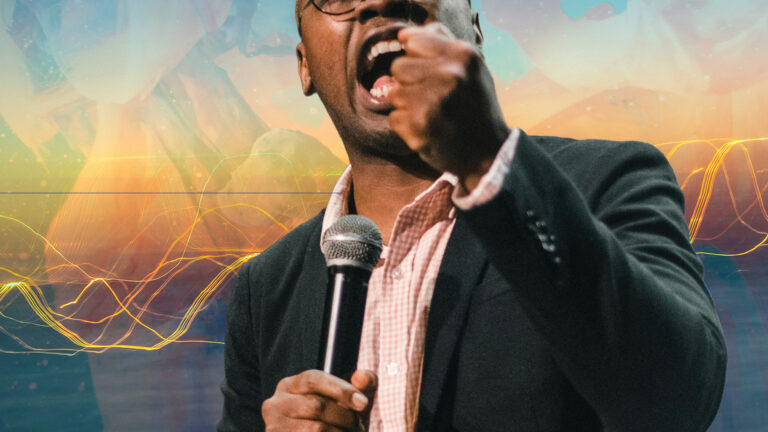





For the average Nigerian Christian, dancing is an integral part of the worship of God on Sunday morning. When the people of God gather, they sing, they pray and they dance. The words of the popular hymn corroborate this view:
When the Spirit of the Lord is within my heart,
I will dance as David danced.
It’s important to define what I mean by dancing. Dancing in Nigeria is not like how, in a western church, you might see a worshipper gently swaying from side to side. No. For Nigerians dancing is a vigorous, full-throated, sweaty, whole-body exercise. It isn’t untypical to enter a church service and find people dancing with abandon in the aisles. So this article is focused on that particular experience, where the dancing is exuberant and central to the worship experience.
It’s a good question. It deserves a serious answer.
It is strange for a Nigerian to come into a reformed Baptist church like mine and see a different style of worship. Recently a young lady started attending our church and pretty soon after she asked my wife and I why we worshipped the way we did. After some back and forth conversation, she asked the real question that was troubling her: Is it wrong to dance in church?
It’s a good question. And it deserves a serious answer. Below is my attempt to do that; and explain why we do things differently in our church.
1. Observe the New Testament Church
Because our church holds to the regulative principle of worship, we try to worship God according to the model of the New Testament church. And when we look at the pages of the Bible, we see that corporate gatherings of God’s people in the New Testament: read the word, preached the word, prayed, and sang to God. There isn’t a single mention of anyone dancing.
2. Consider Church History
Similarly to the New Testament, when we read through the pages of church history and the gospel’s intersection with various cultures through the ages we don’t see any sustained testimony that our forefathers in the faith considering it appropriate to include full-bodied dancing in their worship. As far as I’ve seen in my research, the advent of these types of gyration in the African church started with the African Independent Churches in the early 1900s and was taken to the next level by the Pentecostal movements in the 1970s. In other words, within some 2 000 years of church history these are very recent developments.
3. The Purpose of Sunday Worship
As I argued elsewhere, we gather for church week-by-week for the glory of God. Therefore everything we do in a worship service should be about God: learning about him; praising him intelligently; and encouraging one another in our faith journey. Whatever doesn’t advance those purposes shouldn’t be included. It is a solemn thing to be gathered together in the presence of the living God.
4. Beware Self-Centred Worship
Following on from the previous point, my experience and many conversations suggest that the primary reason for exuberant dancing in worship is simply because congregants want it. Because Africans are exuberant people they want exuberant praise. It’s exciting. Stimulating. Attractive. It’s no coincidence that many churches now call their Sunday morning gatherings Celebration Services.
We must remind people that Sunday worship services aren’t about what they want.
I’m not for a second suggesting our worship isn’t celebratory. Nor that we shouldn’t carry a celebratory mood into it. However, I am asking whether we should arrange our services around people’s preferences rather than what God commands. The path of people pleasing is a race to the bottom that never ends well, for people’s demands are unending and innovation follows innovation, novelty gives way to newer novelties. Trends eventually make way for others and chasing them relentless. So we must be on guard against self-centredness. We must remind people that Sunday worship services aren’t about what they want.
5. We Are Witnesses to Unbelievers
Enter a church auditorium in Nigeria today and what you’ll find won’t be any different from a regular Nigerian party. The music is loud. People are jovial. Most of all, some serious dancing is taking place. Is this a birthday party? Or are we celebrating Jesus? It’s often genuinely difficult to tell.
Contextualisation properly understood doesn’t mean being captured by the culture.
Now, I’m all for contextualisation. But contextualisation properly understood doesn’t mean being captured by the culture. And it’s hard to deny that things have gotten out of hand.
In fact, most of us can testify to things getting out of hand. We need only review the lyrics of a popular song, which says in pidgin: no be say I dey craze na God I dey praise (‘I am not crazy, I am just praising God’). They’re revealing words, proof that some of our “praise and worship” is so over the top that the charge of behaving like crazy people can now be made about Christians.
A More Important Question
Ultimately to answer our original question—is it wrong to dance in church?—must first answer another: what is the purpose of our Sunday morning gatherings? I think the answer to that question is twofold:
- To testify to the glory of God
- To bear witness to the unbelieving world.
If you agree with that framing then I don’t think it’s difficult to see why dancing shouldn’t be part of our Sunday worship services.