





I don’t shed tears easily. So I surprised myself when I read Ezekiel 10 and 11 several years ago. As the prophet describes God’s presence slowly edging out of the temple, the weight of emotion overwhelmed me.
God travelled with his people—even during their judgment.
Ezekiel 8 had just described the horrific idolatry taking place in the temple courts. In response, God separates himself from a rebellious people. “Son of man, do you see what they are doing, the great abominations that the house of Israel are committing here, to drive me far from my sanctuary?” (Ezekiel 8:6). “And the glory of the Lord went up from the midst of the city and stood on the mountain that is on the east side of the city” (Ezekiel 11:23). But where does the glory of God go? Ezekiel has already been shown, in his first chapter. On Ezekiel’s 30th birthday, when he should’ve been taking his place amongst the priesthood with much celebration, the prophet sees a vision of God’s presence with his people in exile. It now makes sense. God’s presence has travelled to be with his people—even during their judgment.
Profound Theology for Normal People
In his book, A Fire By Night: Becoming a People of God’s Presence, Alan Frow argues that God’s practice hasn’t changed. He still chooses to dwell among his people. Throughout the book, Alan exhorts us to live out of this reality, as a people of his presence.
God dwells among his people.
The book came about after Alan read G. K. Beale’s extensive treatise on the topic, The Temple and the Church’s Mission. Alan realised that this topic needed a broader reach; in his own words, “I hoped somehow to put his profound theology of presence onto a lower shelf for people who were hungry learners but less academically inclined. In other words, I wanted to write a book about God’s presence for normal people.” In A Fire By Night, Alan accomplishes just that, making this great theological truth feel both deeply personal and remarkably practical.
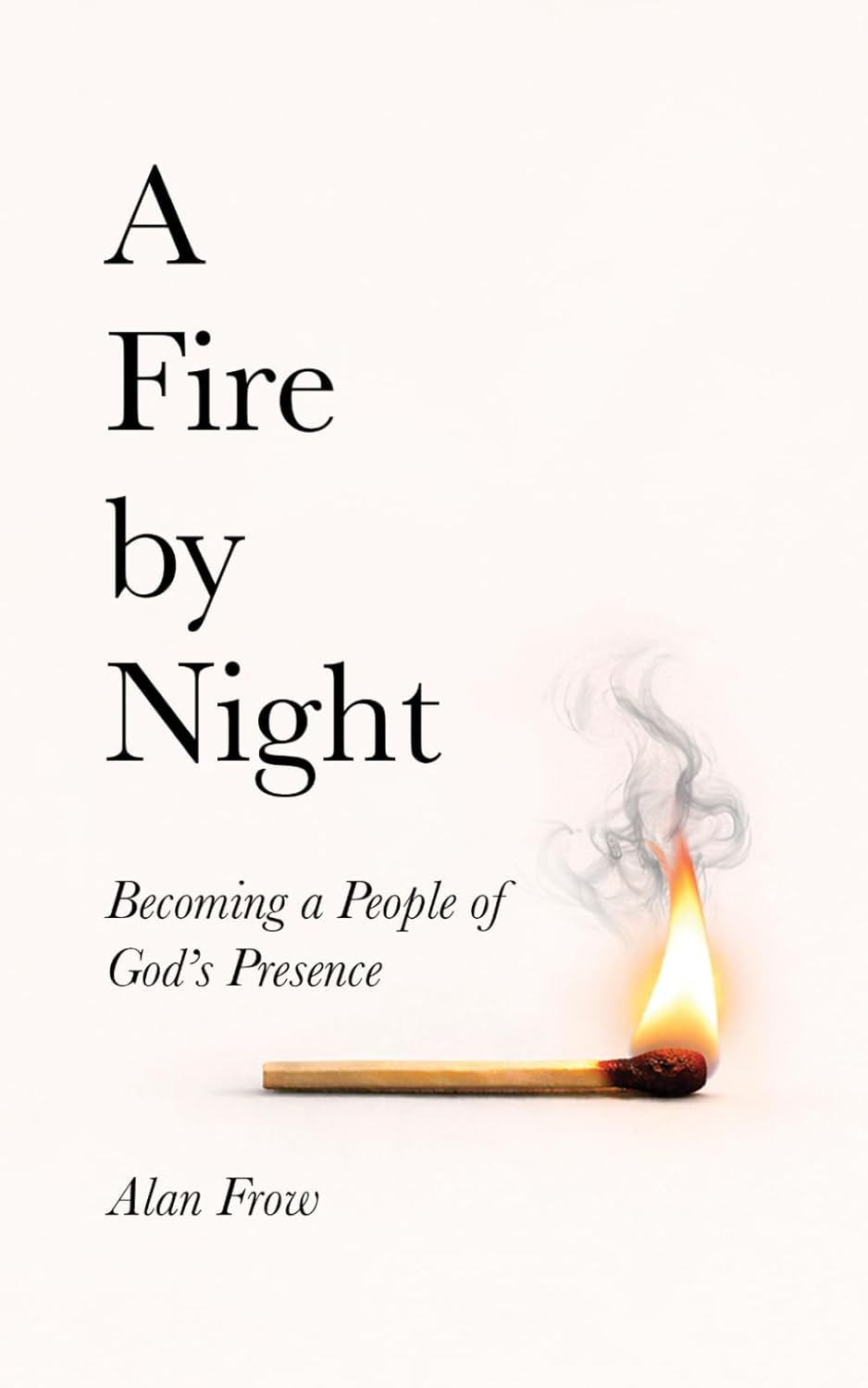
A Fire by Night: Becoming a People of God's Presence
Alan Frow
A Fire by Night: Becoming a People of God's Presence
Alan Frow
The cloud by day and the fire by night stand as a sacred billboard, selling us on the promise that God is ever present with His people, even in wilderness seasons—perhaps particularly in wilderness seasons. As you follow the fire cloud through the pages of Scripture, you will be drawn into the sacred hope that God’s presence is still undeniably with you and before you.
What I love about Alan’s approach is that he doesn’t start at the tabernacle. Rather, he starts in Eden, explaining that the motifs in the tabernacle (and later the temple) pointed backwards to a time when God walked amongst his people in the Garden. He quotes Beale that Eden was God’s first dwelling place on earth, “In the same manner that ancient palaces were adjoined by gardens, Eden is the palatial residence of God, and the garden adjoins God’s residence.” But the garden is much more—it’s a garden temple.
God Doesn’t Abandon Those He Calls
Alan writes at a fast pace, referencing theologians, cultural moments and personal stories in a way that inspires and drives his argument forward. In the introduction and first chapter alone, I counted references to Augustine, J. I. Packer, C. S. Lewis, Charles Spurgeon, Helmut Thielicke, Dallas Willard and Tim Keller. Alan is clearly not only a voracious reader but also widely-read.
Difficult seasons are often the places where God’s guidance becomes most tangible.
Only, the book still feels very accessible. While Alan takes us on a biblical theology of God’s presence, spanning tabernacle and temple through to Christ, his Church and his future reign, he mostly camps around the Exodus narrative, where God led his people for four decades in a visible expression of his presence. About this choice, Alan writes, “I chose this portion of Scripture in particular because life seems to feel like a wilderness to many. The heat of our day and the darkness of our cultural mood are pervasive. Yet the cloud by day and the fire by night stand as a sacred billboard, selling us on the promise that God is ever present with His people, even in wilderness seasons.”
This imagery becomes a unifying thread, helping readers see the Bible as one coherent story about God dwelling among his people. Rather than treating the Old Testament as disconnected background material, Alan shows how the wilderness journey speaks directly into contemporary Christian experience. Seasons of uncertainty, transition, suffering, and waiting are not signs of abandonment; they are often the very places where God’s guidance becomes most tangible.
Confusion and Division About God’s Presence
One humorous moment in the book is when Alan relays his experience of a pastors’ gathering in his hometown of Durban, South Africa. Two pastors were correcting each other’s theology in a ‘pray-off’: one was petitioning for God’s presence to be poured out; the other was giving thanks that God’s presence was already known. Alan concludes that both pastors had some of the truth, but instead of viewing it as either/or, they should have rather embraced it as both/and.
Adopting this broad view, Alan outlines seven scriptural descriptions of God’s presence, including his: omnipresence; presence in creation; presence through common grace; covenant presence; incarnational presence; indwelling presence; and manifest presence. The last few chapters of the book describe how God’s presence consecrates us, reconciles us and engages us. Alan illustrates this with reflections on growing up in Apartheid South Africa and his more recent experience of prevailing prayer at Asbury University.
In an era of polarising views on the topic of how God dwells with his people, Alan’s balancing wisdom is much needed. He writes in a way that, whatever your church tradition, you will feel challenged to live out the identity that Jesus has given us through the gospel—as a people of God’s gracious presence.
“The Lord Is There”
With thoughtful discussion questions after each chapter, A Fire By Night is ideal for small groups, ministry teams, or any Christian longing to rediscover that the God who dwelt among his people in the wilderness still dwells with his Church today.
God who dwelt among his people in the wilderness still dwells with his Church.
The book of Ezekiel ends with this same theme. After Ezekiel is taken around a temple city that has many similarities to the one described in Revelation, the city is named by God using the language of presence: “The name of the city from that time on shall be, The Lord Is There” (Ezekiel 48:35b).