






The topic of this article is a sensitive one. Authorities and leaders are typically honoured or feared. Only, as admirable as the word honour may sound, the respect given to those figures often arises out of coercion or intimidation. Whether in homes, churches, or society, authority has frequently been misused. As a result, it is often associated with control, dominance, and even abuse.
Is authority good or bad?
Most of us find it difficult to submit to authority. Strong cries for freedom can be heard everywhere, perhaps especially across Africa. People desire to live freely. In such a time, when authority is viewed negatively, an important question arises. Is it good or bad? Where do we trace the concept of authority within the biblical landscape? It is in the midst of these questions that we encounter a really helpful little book from Jonathan Leeman, Using Authority Well.
Recovering God’s Design
Leeman begins by acknowledging that authority is a gift. It’s a gift that can either be used for good or bad. When exercised according to God’s will, it brings life and flourishing to those under its care. However, the opposite is also true. When it is misused, the good gift becomes sour and destructive.
When authority is misused, the good gift becomes destructive.
Leeman then makes an important observation that shapes the entire book: people spend a lot of time talking about bad authority; much more than they typically do about good authority. This reflects the human tendency to notice and criticise what is wrong, while being slow to recognise and appreciate what is functioning as it should. Good and well-managed authority typically goes unnoticed and unspoken. But this tendency has created a skewed perspective whereby we fixate on failings rather than recovering its potential benefits and celebrating its God-given purpose.
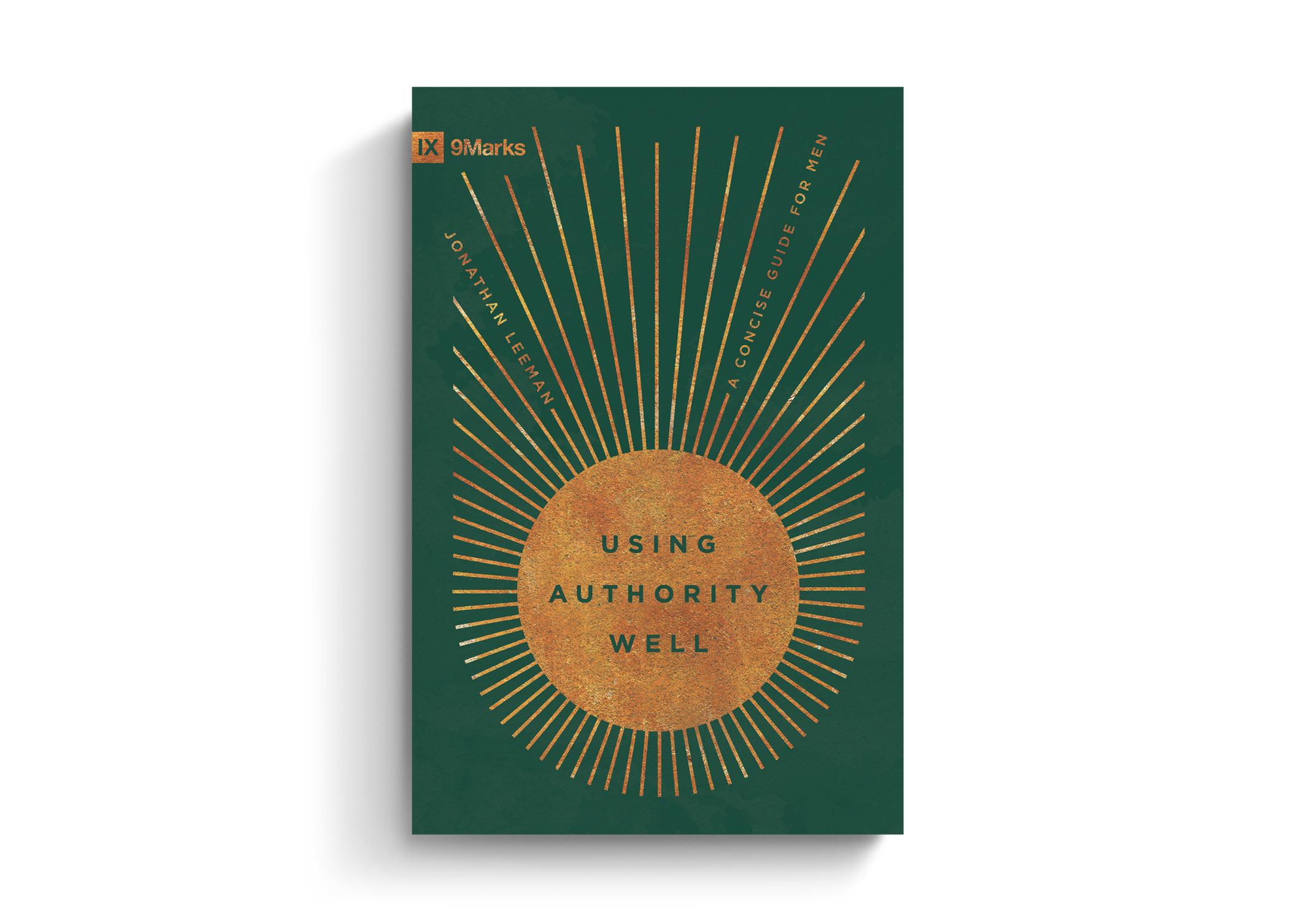
Using Authority Well: A Concise Guide for Men
Jonathan Leeman
Many men today have lost their bearings when it comes to leadership. In this condensed version of his book Authority, Jonathan Leeman equips men to take hold of the authority they’ve received and responsibly steward it for the good of others.
Exploring the domains of marriage, fatherhood, church, and the workplace, he offers practical, scripture-based advice for daily life. This accessible guide, perfect for men’s groups, helps readers submit to God and gain biblical wisdom for their most important roles.
Throughout his book, therefore, Leeman sets out to demonstrate what good authority looks like; he devotes much of the book to offering practical insights and applications, presenting it as a gift from God. Upon reflection, I’d like to highlight three of the points that Leeman makes concerning authority.
1. A Gift from God
Every person, in one way or another, has authority because it is part of who we are as human beings, created in the image of God. Leeman argues clearly that at creation, God commanded humanity to multiply, fill the earth, have dominion over it, and subdue it (Genesis 1:28). This is, in a sense, the “job description” for every human being. God created us to exercise dominion.
Everyone has authority because it’s part of who we are as human beings.
Thus authority before the fall was a good gift from God. However, after the fall, everything became distorted. Among the good things that were broken and given over to harmful expression is authority. As Leeman writes, “Authority in creation and redemption is good, but in the fall it is bad” (p6). Christians belong to the new creation. Thus we shouldn’t only affirm that authority is good by virtue of being God-given; we should also use it in such a way that it promotes life and flourishing.
Building on the above, authority isn’t a necessary evil. Rather, it is a fundamental part of human identity and society. We cannot define or govern ourselves apart from it. It is a necessary part of our existence. Furthermore, when we faithfully exercise authority we image God. For he created us to rule, to have dominion over the earth and subdue it.
Because authority is a gift of God, the solution to harmful and damaging expressions isn’t rejection but recovery. Instead of resisting authority entirely, we are called to embrace it as God’s gift. We must use it for his glory and the good of others.
2. For the Good of Others
Next, Leeman draws a crucial distinction between power and authority. Power is, as he defines it, the capacity or ability to act. Authority, on the other hand, is the moral right to exercise that power. None of us are omnipotent; only God is. Nor is human authority without limits. In fact, it is bound to specific roles and responsibilities; it isn’t over everything and everyone. The earth and everything in it belong to God. Nothing falls outside of his rule. This means both that our authority is necessarily limited and that we are accountable to God for how we use it. He is Lord. We aren’t.
We are accountable to God for how we use our authority. He is Lord. We aren’t.
Sadly, a lot of the time humans confuse authority with expressions of power. Any threats or perceived competition against those in authority are often treated as punishable offences. However, as Leeman explains, “good authority creates, builds up, strengthens, disciples, corrects, gives opportunity, and passes on power” (p11). To argue this life-giving aspect of authority, Leeman calls attention to the words of David in 2 Samuel 27:4. Commenting on those words, Leeman adds, “Good authority is like that sun and rain. It gives life. It creates vitality and colour” (p4).
Godly authority is life-giving. It does not suppress others. Nor does it scupper them to advance the self. No. It cultivates growth in others. It seeks the best for those under it. Godly authority doesn’t view people as threats to control, but as individuals to nurture and strengthen. Rather than diminishing others, it seeks their good, actively working toward their flourishing.
3. Determined by Christ
The practicality of Leeman’s book is one of its greatest strengths. For Leeman spends a significant portion of his short work applying the concept of authority across different roles, explaining each with clear “job descriptions”. One thing remains consistent throughout: it must reflect Christ. Leeman ensures the reader clearly understands that every expression of authority is ultimately measured by how faithfully it mirrors Christ.
A husband is entrusted with authority of counsel to sacrificially love his wife, just as Christ loves the church. The core idea is that a husband’s authority is meant to model the theology of Christ and the church. Exercised badly, a husband misrepresents Christ. Therefore, husbands must depend on Christ for help and wisdom.
A father’s authority is deeply formative. It shapes how children understand God as Father. A faithful father can help his children trust God more deeply, while a harsh or absent father can hinder that understanding. This role carries immense weight; it can either faithfully develop or irreparably damage a child’s view of God.
In explaining the role of managers, Leeman highlights an another important job that is easily neglected. It is the responsibility of a manager to give fair wages to workers who provide honest, hardworking labour. Workers aren’t tools. They are bear the image of God. Therefore they deserve dignity and fair treatment.
Authority is measured by how faithfully it mirrors Christ.
The authority of the elder is pastoral, not coercive. Elders are called to teach and to exemplify to the church the reality of the new creation and the kingdom of God in the present life. This is achieved through shepherding and overseeing the body of Christ, all of which is rooted in faithfulness to scripture rather than a desire for personal control or power over others.
An Important Book for a Misunderstood Matter
Though short, Leeman’s book offers a much-needed correction. It helps us see that authority is a gift from God; a responsibility to steward; a tool to help others flourish; and a means of reflecting Christ. We are often quick to point out the failures of authorities and leaders. However, none of us has used authority perfectly. Only Christ. This book, therefore, calls us to use our authority as a good gift for the glory of God and benefit of others.