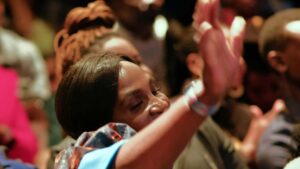




Hearing from God is a desire of many Christians in Africa. This desire is motivated by a longing for guidance, in a world of competing voices. Others desire assurance, embedded in the longing to be confident that you’re truly God’s child and on the correct path. We long to know that what God has promised will be fulfilled. At the right time. Others desire comfort from God in the midst of suffering, reassurance in the face of persecution. These believers wonder, “Is God with me?” Still others want to hear from God because they desire to know what the future holds. We cannot see it. But the all-knowing God could show us what the future holds, so that we can plan accordingly. These are real reasons.
Is the Bible enough?
Across African churches, another question remains. We could say this question lies behind the intense but seemingly unfulfilled desire to hear from God. Does God still speak today, in the same way he did in the ministries of Isaiah or Elijah, or the apostolic age, through the likes of Peter or Paul? Asking this question, something many Africans do, suggests that God has gone silent. But even as they ask that question, many believers will be quick to add that we have the Bible. We have God’s word. Thus, maybe the question isn’t blankly about whether God still speaks or has gone silent. Maybe the question is about whether the Bible is enough. Are we missing some significant revelation from God? Is the Bible sufficient for our faith and practice? Do we need more?
Below, I argue that God still speaks today. He does this clearly, authoritatively, and for our salvation—through the scriptures. The Bible. It is the word of God. And through his word, God speaks sufficiently.
Scripture: Divine and Dependable
You might ask: what is scripture? Paul, in the second pastoral letter to his spiritual son Timothy, wrote a powerful statement about scripture. “All Scripture is breathed out by God and profitable for teaching, for reproof, for correction, and for training in righteousness, that the man of God may be complete, equipped for every good work” (2 Timothy 3:16-17).
Just as breath comes from a person, so scripture comes from God.
Paul says that all of scripture, the whole Bible, is “God-breathed.” God inspired it. Just as breath comes from a person, so scripture comes from God. The Bible is not the counsel of man. Nor is it a collection of wise sayings or human reflection about God. It is God’s own words. God inspired the human authors. Through them, he communicated his very words for the benefit of his people. And because the Bible is of divine origin, its authority is absolute and its message trustworthy.
A Sufficient Word From God
In those verses, Paul teaches that the Bible is sufficient. It’s powerful. Beneficial. It contains God’s rule for faith and practice. God inspired every part of the Bible. Everything is meaningful and purposefully placed. Since all of scripture has a divine origin, it is profitable for a wide range of purposes.
The Bible Teaches Us
This means that in the Bible God speaks an authoritative word, to shape what we believe about God, ourselves, the world, sin, salvation, and eternity. We live in a world that catechises us daily. Social media, entertainment, and our cultural backgrounds constantly shape our thinking. In the school of God, we have his word. We have the Bible. When it is read rightly, it transforms hearts. The Bible anchors us so that we aren’t tossed to and fro by the waves and carried about by every wind of doctrine (Ephesians 4:14). In brief. The Bible doesn’t simply inform. It transforms. It shapes our worldview and becomes the lens through which we view everything.
The Bible Reproves Us
Paul then says that scripture is profitable for reproof. Scripture confronts error. In a world where everyone wants to be subjective in their beliefs, where correction is often considered judgmental, we have a trustworthy tool. God has given his word to confront false beliefs. Both ours and others’. The word of God discerns the thoughts and intentions of the heart (Hebrews 4:12-13). Through the Bible, therefore, God reproves us. When we are misguided, disordered, or straying from the way, God hasn’t left us without instruction. Through his word, God reproves. This can be uncomfortable. But it is an act of grace. It is God’s love toward us.
The Bible Corrects Us
After pointing out what is wrong, that is, reproof (above), God’s word doesn’t leave us to die in guilt. As God speaks he also corrects. Correction restores what is broken and shows the right direction. This word carries the meaning of being made upright again. God corrects his people through scripture. He doesn’t only condemn. God also guides. God tells the anxious heart to trust in him; he tells the greedy heart to learn contentment. He tells the bitter and unforgiving heart to forgive just as Christ forgave. Scripture doesn’t simply say, “You are wrong.” It also says, “Here is the better way.”
The Bible Trains Us
Paul also says that scripture trains us in righteousness. Training implies a process. It isn’t instant. It involves ongoing transformation. Just as athletes train consistently, believers are gradually shaped through the word. This means God is constantly instructing us, transforming us, and shaping us by his word. This process involves discipline and devotion.
Through the Bible, we learn how to live righteously while navigating work pressures, responsibilities, tensions, digital distractions, and moral confusion. Through the Bible, God doesn’t only prepare us for church activities, he prepares us for all of life. We are already equipped and are being equipped progressively by the word of God as we are being made more like Christ.
He Equips Us for Every Good Work
Paul concludes by saying the scriptures move us towards completion, being “equipped for every good work” (2 Timothy 3:17). What a beautiful conclusion. The profitability of the Bible ranges from the conscience to the will and includes daily habits. God instructs the whole person. Through the inspired word of God, we become whole as God helps and equips us for every good work. His word is given to make us more capable, spiritually mature, and prepared to glorify him in our world. Like a house that is completely furnished with everything it needs, we can be comprehensively equipped by God’s word.
The question isn’t whether God still speaks, but whether we’re listening.
We can confidently say that God still speaks today. When the Bible is read, preached, and applied, Christ addresses his people. He does so sufficiently, with authority. The question isn’t whether God still speaks, but whether we are listening to the word he has given.
God Still Speaks
Many churches in Africa today are familiar with the phrase, “God told me…” For some, this language flows from a genuine desire to hear from God. But should we anxiously wait to hear from God while our Bibles remain closed? Do you long for God to speak to you? The very words of God lie before you, in written form.
Will you open the book he has given to us and read it?
God hasn’t withheld his voice. He isn’t silent. He has spoken sufficiently through his Son. And by God’s grace, that word has been preserved in the canon of 66 books in the Bible. By His mercy, he has raised faithful translators so that the scriptures are available in many languages, perhaps even in yours. The question is not whether God has spoken. The question is whether we will open the book he has given to us and read it.
Read your Bible.
 DON’T HAVE PAYPAL TO SET UP A MONTHLY DONATION? If you would like to donate via Payfast – a secure payment gateway available to donors both inside and outside of Africa – please click here.