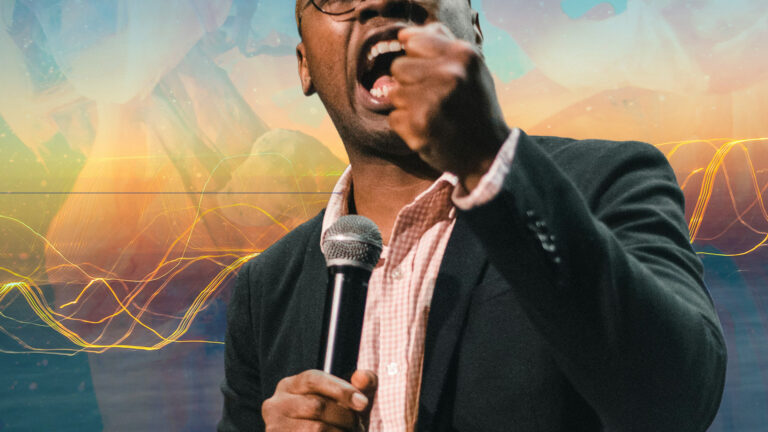
When I was in high school, I occasionally visited certain Pentecostal and prosperity-oriented churches in Ethiopia where I witnessed practices I believed were plainly unbiblical. More than once, I stood up in the middle of a service to challenge the preacher (prophet, man of God) in front of hundreds of people. I was usually treated as one with demons, prayed over, and escorted out by the ushers. With hindsight, I don’t recommend that approach. It was all zeal, little wisdom. But it taught me a lesson I’ve never forgotten: exposing bad theology is not the same as building healthy churches.
Exposing bad theology is not the same as building healthy churches.
As we began publishing biblical resources in Amharic, I noticed something that surprised me. I met pastors who had faithfully served for years but had never read a theology book cover to cover. Doctrines like justification, regeneration, and the sovereignty of God often sounded new – not that they were rejected, but they had rarely been taught. Yet the response was encouraging. Once people encountered these truths, they wanted more. The hunger was there. The theological foundations often weren’t.
That forced me to rethink my assumptions about the evangelical church in Ethiopia. Perhaps our problem isn’t that we believe the wrong things but rather that many of us have never been taught the central things clearly enough.
I’m writing this as someone who loves the Ethiopian church deeply; works with it every day; and believes God has done something remarkable here. Ethiopian evangelical Christianity is alive. Churches are full. People pray seriously. Evangelism is taking place. Suffering isn’t an abstract idea. In many ways, we have what much of the global church has lost.
At the same time, we do have real problems—and pretending that they don’t exist is one of them.
A Very Brief History
The evangelical church in Ethiopia grew very fast, especially over the last century. It grew through revival, bold preaching, sacrifice, and spiritual hunger. But theology and church structure didn’t grow at the same speed. Experience came first; formation later, and sometimes never at all. So we learned how to worship, pray, fast, and gather crowds before we learned how to think carefully, preach expositionally, or build churches that last more than one generation.
Theology and church structure didn’t grow at the same speed.
This gap created space for prosperity theology, especially in urban Pentecostal churches—not dissimilar from in Congo. The message was simple: blessing, victory, breakthroughs, and success. Little was said about repentance, suffering, union with Christ, or the slow work of sanctification. And that theology has done real damage. This much is obvious.
But the response to that damage has created a different problem.
Ineffective Correctives
Over the last couple of decades, many Ethiopian pastors and leaders have gone to the West for theological education. They’ve studied church history and doctrine, Old and New Testament exegesis, among other things, and usually very seriously. They come back knowing the theological map. Calvinism, Arminianism, liberal theology, fundamentalism, you name it. They can spot errors quickly. They know what’s wrong. The question is what happens next.
It’s easier than the demanding work of building churches and teaching doctrine.
What typically happens is that they return and remain inside Pentecostal churches, saying they want to ‘reform from within.’ On paper it sounds noble. But in reality it rarely works. There are no confessions to appeal to; few clear doctrinal boundaries; no church discipline; and little to no shared understanding of the authority of the local church. All this means you can critique endlessly but it won’t actually end in structural change. So reform stays at the level of conversations, podcasts, social media debates, and conference panels.
This largely ineffective commitment to change usually comes in the shape of targeting of prosperity preachers. And look, they should be corrected. No question. But over time being anti-prosperity becomes a whole theological identity. It’s easier than doing the demanding work of building churches, teaching doctrine patiently, or preaching through entire books of the Bible year after year.
And here’s where things get uncomfortable. In reacting against prosperity theology, many end up drifting toward liberal theology without always admitting it, sometimes without even realising it. On the other hand, others drift into damning legalism.
Two Common Missteps
1. Liberal Theology
Liberal theology doesn’t usually show up shouting: “The Bible is false.” It’s much more subtle. Scripture is still quoted, but it’s no longer the final authority. It usually manifests itself subtly and gradually by softening hard doctrines. The biblical teachings on judgment, substitutionary atonement, divine wrath, regeneration, election, and perseverance either slowly disappear or get redefined. The gospel becomes more about ethics, social concerns, and personal meaning than about sin and salvation. Certainty is frowned upon while ambiguity is praised as intellectual maturity.
The tragic irony is that we reject a theology that empties the cross of suffering, only to adopt one that empties it of power.
2. Legalism
There’s another problem we don’t talk about enough. Legalism.
People learn Christian behaviour long before they understand what it means to be born again.
Many evangelical churches in Ethiopia are moralistic without being gospel-centred. Their rules are clear, and they assume transformation will happen in the lives of the believers. However, conversion is rarely explained carefully. People learn how to behave like Christians long before they understand what it means to be born again. Christianity is often treated as a rehabilitation program for the visibly broken, while the older brother remains convinced he can earn the Father’s acceptance through obedience. The doctrine of assurance is largely neglected, producing fearful Christians and a view of holiness centred on external behaviour rather than heart transformation.
The Much Deeper Issue
All of this connects to a deeper problem: we are not clear about conversion. We speak the language of salvation constantly, but we rarely define it biblically. Repentance, faith, regeneration, justification, and sanctification are blended into one vague religious experience. People ‘accept Jesus’ but don’t know what’s changed. And because expositional preaching is rare, the church isn’t trained to follow an argument in the Bible nor to see how the gospel runs through the whole Bible.
We talk about being saved by grace but don’t understand its theological depth.
Most sermons are topical or motivational pulled out from isolated verses. Well-intentioned, of course. But they don’t form people. They don’t teach Christians how to read scripture. They don’t anchor faith when suffering comes. And without consistent expositional preaching, the doctrines of grace, or any other doctrine, never take root. We talk about being saved by grace, but we don’t understand its theological depth. Salvation is still functionally human-centered, which only feeds insecurity and legalism.
So we end up in a strange place. On one side, we have shallow theology that promises too much. On the other side stands intellectual critique that builds very little. And desperately standing in the middle, is a vast majority of ordinary, faithful, malnourished believers who’re underfed.
What Ethiopia Needs Now
What we need now is not another wave of influential voices, but deeper roots and a recovery of the heart of the Reformation. From where I stand as a publisher, that means books that are actually read; catechisms in local languages; and resources that equip pastors with theology that is clear, biblical, and unashamedly confessional.
We are no longer in an era where simply surviving persecution or having the freedom to preach the gospel is enough. By God’s grace, those doors are open. The task before us now is deeper: to build churches with sound doctrine, faithful expositional preaching, biblical pastoral care, and clear theological boundaries that can sustain the next generation.
The future of the Ethiopian evangelical church won’t be secured by how loud we are against error.
Looking back, I smile at that young man who thought confronting error was enough. It wasn’t. The Ethiopian church doesn’t need more critics of bad theology; it needs more planters of healthy churches. The future of the Ethiopian evangelical church won’t be secured by how loud we are against error, but by how patiently we teach truth; not by how sophisticated our critiques sound, but by whether ordinary Christians understand the gospel, know their Bibles and are grounded in grace alone through faith alone in the finished work of Christ alone.
The church will continue to grow. The real question is whether it will grow up.