
This year marked 1700 years since the Council of Nicaea. For some, Nicaea feels like distant, dusty history. For others, it’s a footnote in debates with Jehovah’s Witnesses or skeptics. But Nicaea was no side issue. It was one of the Church’s defining stands for the gospel. For at its centre was the all-important question: who is Jesus Christ?
Who is Jesus Christ?
You’re reading the first article of a three-part series. In this article, we’re going to revisit the drama of the Council of Nicaea. Then, in the second and third articles respectively, we’ll trace the biblical roots of Nicene Christology in Paul’s letter to the Colossians and consider why Nicaea still matters for apologetics and mission in Africa today.
The Setting: Persecution and Popularity
In AD 313, Constantine issued the Edict of Milan, ending centuries of brutal persecution within the Roman Empire. True, that persecution had ebbed and flowed for three centuries, depending on the emperor’s disposition. But with Constantine, everything changed. Christians who once met in caves could now worship openly. Bishops scarred by torture—some missing eyes, others limping from broken bones—could gather without fear.
Peace brought a new crisis: not persecution from outside, but false teaching within.
Only, this peace brought a new crisis: not persecution from outside, but false teaching within. In Alexandria, a presbyter named Arius began teaching that Jesus wasn’t truly God. He put his doctrine into popular songs, easy for dockworkers and children to sing, “There was a time when the Son was not.” Arius argued that the Son was a created being—higher than humans, yes, but still a creature. He couldn’t be eternal with the Father, Arius contested. In his own words, “the Son has a beginning, but God is without beginning” (Athanasius, Orations Against the Arians 1.5).
This teaching spread rapidly. Some found it more logical. After all, how could God share his divinity with another? Others saw it as safer. If Jesus is less than God, then God remains untouchable, distant. The controversy threatened to tear the Church apart.
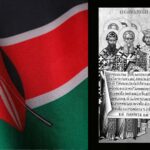
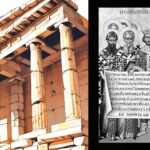
Constantine, eager for unity in his empire, called what would come to be called the Council of Nicaea in AD 325. Around 300 bishops assembled, and what followed would shape the Christian faith to this present day.
The Debate: A Word Worth Suffering For
The issue was sharp: is Jesus Christ fully God or something less? The Arians pointed to verses like Proverbs 8:22, where Wisdom is said to be “created.” They argued that if Christ is God’s “Wisdom” and “Firstborn,” he must have had a beginning.
The defenders of Christ also turned to the Bible. “In the beginning was the Word, and the Word was with God, and the Word was God” (John 1:1). “In him all the fullness of God was pleased to dwell” (Colossians 1:19). “Thomas said to him, ‘My Lord and my God!'” (John 20:28).
If Christ isn’t truly God, Athanasius insisted, he cannot truly save.
In many ways, the debate turned on a decisive word: homoousios. That is, against Arius and his ilk, the Church insisted that the Son is “of the same essence” as the Father; not similar (homoiousios) in essence, but the same. Athanasius, then a young deacon, championed the argument. If Christ isn’t truly God, Athanasius insisted, he cannot truly save. Or, as Gregory of Nazianzus would later put it, “That which he has not assumed he has not healed” (Oration 29.19).
If Jesus isn’t fully divine, our humanity isn’t united to God. If he isn’t fully human, our sins aren’t borne. The gospel itself hangs in the balance.
The Creed: Confessing the True Christ
The result of the Council of Nicaea was the Nicene Creed, a bold confession of Christ’s deity. Its original version declared: “We believe in one Lord Jesus Christ, the Son of God, begotten of the Father, only-begotten, that is, from the essence of the Father, God from God, Light from Light, true God from true God, begotten not made, of one essence with the Father, through whom all things were made.”
This wasn’t theological hair-splitting. It was the heart of salvation.
The Son shares in the Father’s divine nature. He is “Begotten not made.” He is eternally from the Father, not created like us. The Son is “of one essence with the Father,” rather than some lesser deity. He is the same God, “through whom all things were made.” Christ is the Creator, not a creation nor part of it.
The Nicene Creed also condemned Arianism explicitly: “But those who say: ‘There was a time when he was not,’ and ‘He was not before he was made’…the Catholic and Apostolic Church anathematises.” This wasn’t theological hair-splitting. It was the heart of salvation. If Christ isn’t eternal God, he cannot bring us to God. But if he is God, then his cross is sufficient for the world.
The Aftermath: Athanasius Against the World
Most bishops in attendance at the Council of Nicaea signed the creed, though some did so grudgingly. While Arius was condemned, the controversy didn’t end there. It raged for decades. Athanasius became the creed’s fiercest defender. For his stance, he was exiled five times, hunted by emperors, and slandered as a disturber of the peace. But he wouldn’t yield. All of this earned him the title Athanasius contra mundum (Athanasius against the world).
His courage reminds us that truth is often preserved not by the majority but faithfulness. The gospel doesn’t advance by compromise, but by confessing Christ clearly.
Why the Council of Nicaea Still Matters
Seventeen centuries later, the same questions are alive, if in new clothes. The spirit of Arius isn’t dead. For instance, Jehovah’s Witnesses still deny the full deity of Christ, calling him a created being. Islam honours Jesus as a prophet, but rejects him as the Son of God. Prosperity preachers reduce the Son to a means of wealth, not the Lord of glory. The New Apostolic Reformation (NAR) diminishes Christ by exalting so-called apostles and prophets above his word.
Seventeen centuries later, the same questions are alive, if in new clothes
In every case, Christ is dethroned. His identity is undermined. And whenever Christ is diminished, the gospel is lost. The Council of Nicaea is still needed in our own age. “We believe in one Lord Jesus Christ.” We don’t believe in a mere prophet; miracle-worker; good teacher; or prosperity-giver. No. We believe in the eternal Son of God, Light from Light, true God from true God.
As Paul wrote to the Colossians: “He is the image of the invisible God, the firstborn of all creation. For by him all things were created…and in him all the fullness of God was pleased to dwell” (Colossians 1:15-19).
That is why Nicaea still matters. To defend Christ’s person is to defend his saving work. If he isn’t God, his cross cannot save. If he isn’t man, our sins remain. But because he is both—God and man—Christ’s death reconciles sinners and his resurrection secures eternal life.
Jesus Christ Is Lord
As I said at the outset, this is the first of three articles marking the 1700th anniversary of the Council of Nicaea. In the next article, we’ll look at the Bible, particularly the Christ of Colossians. Finally, we’ll ask what Nicaea means for apologetics in Africa today, where old heresies appear in new robes.
This isn’t only theology—it’s gospel.
1700 years later, we still confess the creed. We still gather each Lord’s Day to declare: Jesus Christ is Lord. And that isn’t only theology—it is gospel.
 DON’T HAVE PAYPAL TO SET UP A MONTHLY DONATION? If you would like to donate via Payfast – a secure payment gateway available to donors both inside and outside of Africa – please click here.