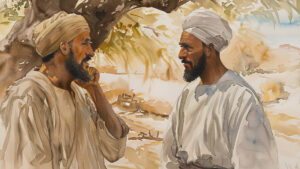

The short-lived yet impactful ministry of Tiyo Soga among the Gcaleka people between 1868 and 1871 was marked by immense suffering. His gospel suffering in ministry coalesced with its successes. Despite deteriorating health, Soga voluntarily laid down his life in the mission field. His ministry reflected his personal gratitude for God’s grace experienced both by himself and his own people, the Gcaleka tribe. Reflecting on the transformative power of the gospel, he concluded that the same power could effectively work among the Gcaleka people. His theological convictions shaped his ministerial practice.
Soga voluntarily laid down his life in the mission field.
This article aims to show that the ministry of Tiyo Soga among the Gcaleka people was characterised by self-denial and sacrificial service. It will also draw several key lessons applicable to contemporary church ministry.
Soga’s Context: Missionary Expansion
Any coherent study of the ministry of Tiyo Soga among the Gcaleka people must take into account the immediate context. The dispossession of Kreli ka Hintsa, paramount chief of the Xhosa people, led to his exile. This incident was partly the result of the infamous cattle-killing (1856-1857), which brought calamity upon the people. Meanwhile, missionary expansion had prompted the Free and United Presbyterian churches to send a delegation. During this time, Soga discerned the chief’s political ambitions. His letter to Alexander Somerville, secretary of the Mission Board of the Presbyterian Churches of Scotland, reveals the complexity of the situation. Thus Soga warned that missionaries should expect extortion from the opportunistic chief and his counsellors.
Soga discerned the chief’s political ambitions.
The Gcalekas distrusted missionaries, believing they served colonial interests. They assumed the British colonial government worked alongside missionaries to weaken traditional leadership. Was this suspicion entirely unfounded? The situation was too complex for a simplistic answer. In his letter to Somerville, dated 29 May 1867, Soga attributed the chief’s distrust of missionaries and the government to the loss of one-third of his land, which had been handed over to the Fingoes and Tambookies. This explains the political milieu of distrust toward both foreign government and the missionaries. Having considered this context, the article now turns to Soga’s call to the Gcaleka people.
His Call to the Gcaleka People
At the United Missionaries Conference in March 1867, Tiyo Soga and William Govan were appointed interim missionaries to Gcalekaland for three months. They prepared their report, presenting it at the July 1867 meeting in King William’s Town, where a permanent missionary was appointed. The chief’s demand for a Xhosa missionary resulted in Soga’s appointment, owing to his vast experience.
Soga believed the ideal missionary identifies with the people, refraining from imposing his own culture.
The Mission Board knew Tiyo Soga’s philosophy of ministry. He believed the ideal missionary should identify with the people, refraining from imposing his own culture upon them. Furthermore, Soga favoured gradual change rather than a radical transformation, warning that ethnic superiority would hinder mission work.
Soga accepted the call to Gcalekaland after prayer. He did so despite poor health, attributing the call to divine providence. In his farewell discourse, he informed his congregation of the spiritual poverty of the Gcaleka people. The United Presbyterian Church formally called him to Gcalekaland in 1868, a place located approximately 128 kilometres from the Mgwali Mission Station.
Tiyo Soga’s Ministry and Mission
The Soga family’s relocation to the newly established Tutuka Station was marked by severe hardship. The climate worsened his health. He encountered hostility and indifference towards the gospel too. Despite the Gcaleka people’s entrenched prejudice, Soga remained steadfast in his ministry, being rooted in his theological convictions. For while he believed in human depravity, he also drew confidence from God’s sovereignty in salvation.
That being said, the Gcalekas’ belief in witchcraft posed a major hindrance to Tiyo Soga’s ministry. Possessing a superstitious worldview, they attributed every misfortune to witchcraft, which would often be tragically followed up by the killing those accused of this practice.
While he believed in human depravity, he also drew confidence from God’s sovereignty.
On one occasion, the chief lost some of his livestock to a mysterious disease. So he sought a scapegoat to purge evil from the land. His counsellors conspired against a fellow counsellor, who’d embraced Christianity. Pretending to seek his approval for killing the supposed culprit, they summoned him to a council meeting. In his dilemma, the counsellor sought advice from Soga, who knew of the conspiracy. Drawing from Exodus 20:13, Soga explained the prohibition of unlawful killing. He also emphasised the positive side to that commandment: the preservation of life. Rather than consenting to bloodshed, the counsellor fled, thus preserving his life from execution.
Faithful Through Sickness and Death
Tiyo Soga’s reluctance to share his medical certificate after being diagnosed with laryngitis reveals his commitment to ministry. His colleagues urged him to retire. But he declined, stating his willingness to lay down his life for the Gcalekas. He regarded his ministry as a gift from God, requiring love for the flock entrusted to his care. Then in the winter of 1871 he fell ill after a trip from Chief Mapassa’s kraal. Again, sickness didn’t stop him from preaching. During a small pox outbreak, he undertook to vaccinate the Gcaleka people and overwork worsened his condition.
On Saturday, 12 August 1871, Tiyo Soga entered into glory.
By 21 July 1871 it was clear that Soga was dying. On the eve of his death, 11 August 1871, he was heard praying in his mother tongue. He prayed for his congregation. He prayed that they would remain steadfast in the faith, despite being without a minister. Even on the threshold of death, we can see Soga’s unwavering faith in Christ and love for his people. On Saturday, 12 August 1871, Tiyo Soga entered into glory.
Practical Implications for Our Ministry
The ministry of Tiyo Soga among the Gcaleka people offers several key lessons applicable to contemporary church ministry.
Firstly, he was clearly committed to the sufficiency of scripture. His application of the Bible in response to witch-hunting practices demonstrated this commitment. His faith, life, and practice were guided by scripture. Such a commitment remains essential for ministry today, in every age. God’s word is more than capable of preparing a minister for his work (2 Timothy 3:16). In Soga’s case, the Spirit-infused vitality of God’s word gradually overcame deep prejudice among the Gcaleka. If our ministries are be effective, we must firmly root our preaching in scripture.
Tiyo Soga’s ministry was characterised by self-denial and sacrificial service.
Secondly, and equally importantly, was his genuine identification with the Gcaleka people. This played a pivotal role in Tiyo Soga’s ministry. He was never indifferent to their life experiences. Through his identification with the Gcalekas, Soga was able to discern their spiritual needs. In the same way, our gospel contextualisation must address the spiritual needs of those to whom we minister. We hinder effective gospel contextualisation when we fail to identify with the people we’re serving.
Finally, Tiyo Soga’s ministry was characterised by self-denial and sacrificial service. His devotion to the Gcaleka congregation was evidenced by his intercession on his deathbed. He endured suffering in order to fulfil his ministry (2 Timothy 4:5). Our contemporary church ministry should emulate Soga’s perseverance. We must recognise that gospel suffering is inseparable from ministry.